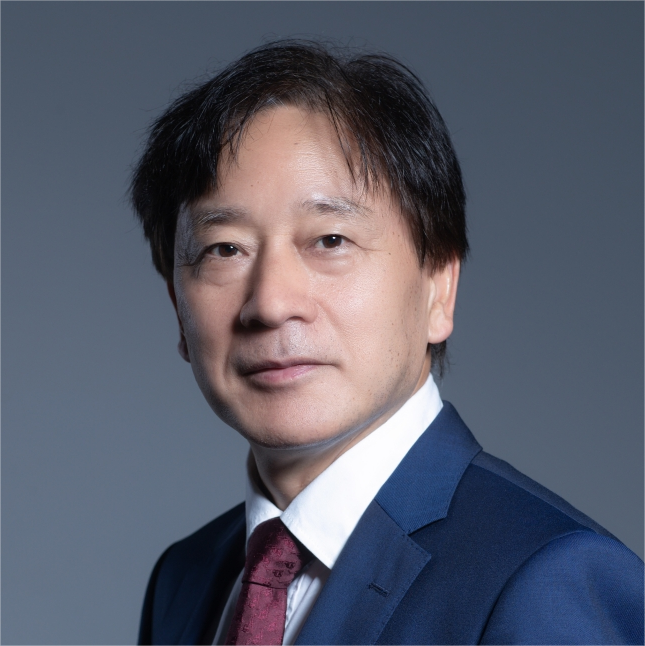
Yaochu Jin
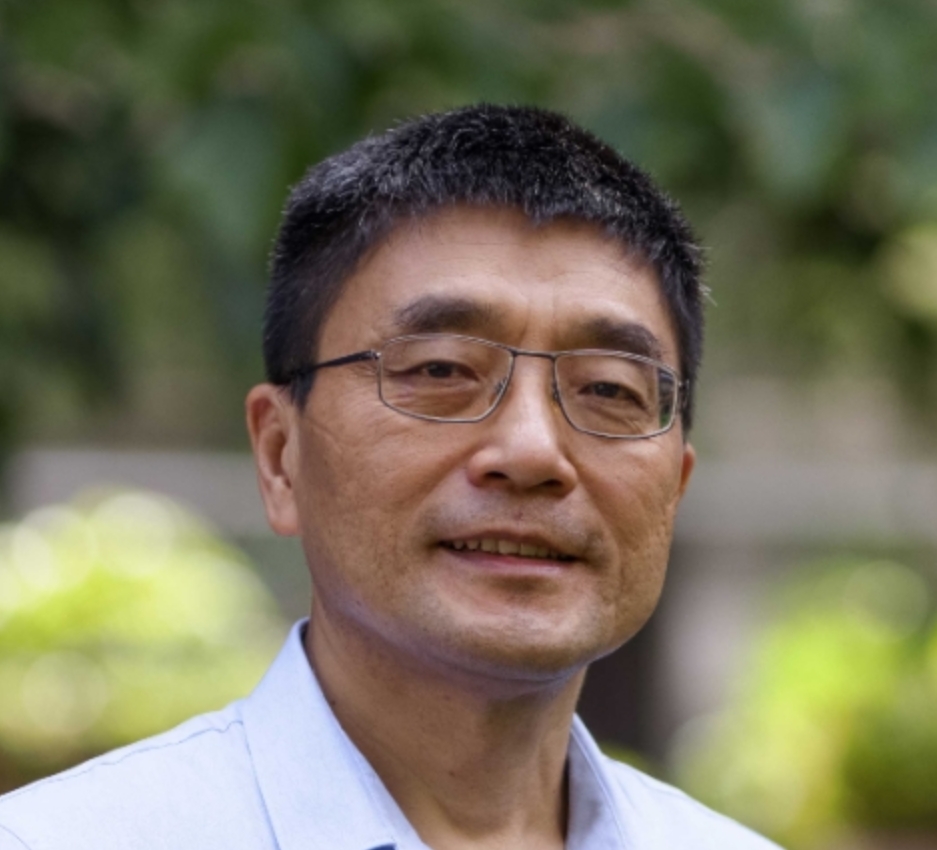
Weisi Lin
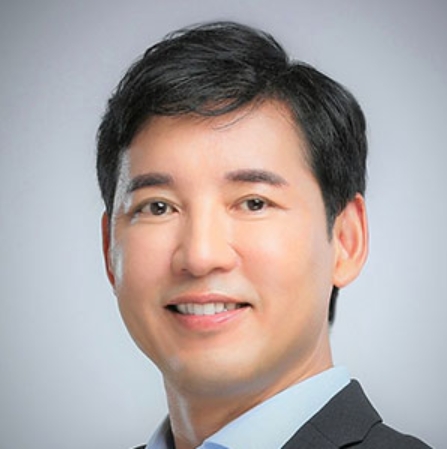
Jianwei Zhang
Chair Professor of Artificial Intelligence
School of Engineering, Westlake University, China
Member of Academia Europae
Fellow of IEEE
|
Secure and federated data-driven optimization is an emerging research area that aims to protect the data security and privacy used in optimization. This talk starts with an introduction to basic ideas of data-driven optimization and federated privacy-preserving data-driven optimization. To protect the privacy of both offline and online data, we introduce a secure federated data-driven optimization framework based on the Diffie-Hellman protocol, in which a semi-honest client is randomly chosen to solve the acquisition function and determine the next sample point, making sure that newly sampled data is also protected. To reduce the negative impact of the noise added in differential privacy, a utility function is proposed to optimize the noise level that can optimally balance privacy preservation and optimization performance. Finally, a federated multi-tasking data-driven optimization algorithm is presented that shares the hyperparameters of Gaussian processes for knowledge transfer, while protecting the data privacy.
|
|
Yaochu Jin
is Chair Professor for AI with the School of Engineering, Westlake University, Hangzhou, China. He was an Alexander von Humboldt Professor for Artificial Intelligence, with the Faculty of Technology, Bielefeld University, Germany. Prior to that, he was a Surrey Distinguished Chair, Professor in Computational Intelligence, Department of Computer Science, University of Surrey, Guildford, U.K. He was a “Finland Distinguished Professor” of University of Jyväskylä, Finland, “Changjiang Distinguished Visiting Professor”, Northeastern University, China, and “Distinguished Visiting Scholar”, University of Technology Sydney, Australia. His main research interests include evolutionary optimization and learning, trustworthy machine learning and optimization, and evolutionary developmental AI. He is a Member of Academia Europaea and Fellow of IEEE.
|
|
|
Prof Jin is presently the President of the IEEE Computational Intelligence Society and Editor-in-Chief of Complex & Intelligent Systems. He was the Editor-in-Chief of the IEEE Transactions on Cognitive and Developmental Systems. He is the recipient of the 2018, 2021 and 2024 IEEE Transactions on Evolutionary Computation Outstanding Paper Award, and the 2015, 2017, and 2020 IEEE Computational Intelligence Magazine Outstanding Paper Award. |
Professor and Director of Technical Aspects of Multimodal Systems
Department of Informatics, University of Hamburg, Germany
Distinguished Visiting Professor of Tsinghua University
Member of German Academy of Science and Engineering
International Member of Chinese Academy of Engineering
Member of Academy of Sciences and Humanities in Hamburg
|
General-purpose robot systems are needed to solve real-world challenges by combining data-based machine learning with physical, kinematic, dynamic, and interaction models of human-in-the-loop intelligent systems. There has been substantial progress in cross-modal learning deep neural networks and Large Multimodal Models (LMMs) in terms of data-driven benchmarking. However, acquiring large multimodal data for robots in the real world is challenging, and such data-driven systems are computationally costly and not yet interpretable. At the same time, most model-based approaches lack robustness in unstructured, dynamic, and changing environments. My talk will first introduce concepts based on findings in cognitive systems that allow a robot to better understand multimodal scenarios by integrating knowledge and learning. I will then outline the necessary modules to enhance the robot's intelligence level. Following that, I will explain how large multimodal learning methods can be realized in intelligent robots. Finally, I will demonstrate several novel robot systems with skills in dexterous manipulation, robust dynamic walking, and natural human-robot interaction, showcasing their potential for service applications.
|
|
Jianwei Zhang is a professor and the Director of Technical Aspects of Multimodal Systems at the Department of Informatics, University of Hamburg, Germany. He is an Academician of the German National Academy of Engineering Sciences, the Academy of Sciences and Humanities in Hamburg, Germany, and a Foreign Member of the Chinese Academy of Engineering. He is also a Distinguished Visiting Professor at Tsinghua University. He received both his Bachelor of Engineering (1986, Computer Control, with distinction) and Master of Engineering (1989, AI) from the Department of Computer Science at Tsinghua University, Beijing, China, and his PhD (1994, Robotics) from the Institute of Real-Time Computer Systems and Robotics, Department of Computer Science, University of Karlsruhe, Germany.
|
|
Jianwei Zhang’s research interests include 3D robot perception, multimodal information processing (visual, auditory, tactile, etc.), cognitive sensor fusion for robot perception, real-time learning and modeling of sensory-motor control tasks, learning and control of robot grasping and in-hand manipulation, experience-based robot learning, bi-manual robot assembly of 3D aggregates, mobile manipulation service robots, and natural human-robot interaction. In these areas, he has published over 500 journal and conference papers. He has served as the General Chair of IEEE MFI 2012, IEEE/RSJ IROS 2015, etc. Additionally, he is an Associated VP of the IEEE Robotics Automation Society CAB. He leads several EU robotics projects, including the RACE (Robustness by Autonomous Competence Enhancement) project, which was the first to apply high-level learning, planning, and reasoning AI methods to service robots. He has received multiple best paper awards at major robotic conferences.
Associate Dean (Research), College of Computing & Data Science
President's Chair in Computer Science
Professor, College of Computing & Data Science
Nanyang Technological University (NTU), Singapore
Fellow of IEEE and IET
|
3D point clouds (PCs) become increasingly available for diversified scenarios, thanks to economical creation of a digital twin for almost everything, enabled by substantial advancement of depth sensing, photogrammetry, and deep learning. This offers a practical bridge between our physical world and its expanding virtual counterpart, promote integration of computer vision and computer graphics that have been two separate realms for long, and facilitate mixed reality and multimedia interaction. Therefore, unprecedented possibilities are expected in digital transformation and smart cities, toward robot navigation, autonomous driving, gaming/entertainment, social media, industrial metaverse, BIM, urban surveillance/planning, digital art, cultural heritage preservation, future training/education, crime investigation, and discovery in medical/biological/material sciences. PCs can be also used to generate alternative representation of 3D visual content, like 3D meshes and emerging Gaussian splatting. This talk will present the recent research and development for recreation, representation, processing and evaluation of PCs, with humans and machines as ultimate users, respectively. Related important topics include various filtering, simplification, compression, registration, shape/mesh construction, saliency/quality evaluation, and image-based localization. Possible future research directions will be highlighted and discussed as well.
|
|
Weisi Lin is an active researcher in image processing, perception-based signal modelling and assessment, video compression, and multimedia communication. He had been the Lab Head, Visual Processing, Institute for Infocomm Research (I2R), Singapore. He is currently a President’s Chair Professor in College of Computing and Data Science, Nanyang Technological University (NTU), Singapore, where he also serves as the Associate Dean (Research). He is a Fellow of IEEE and IET.
|
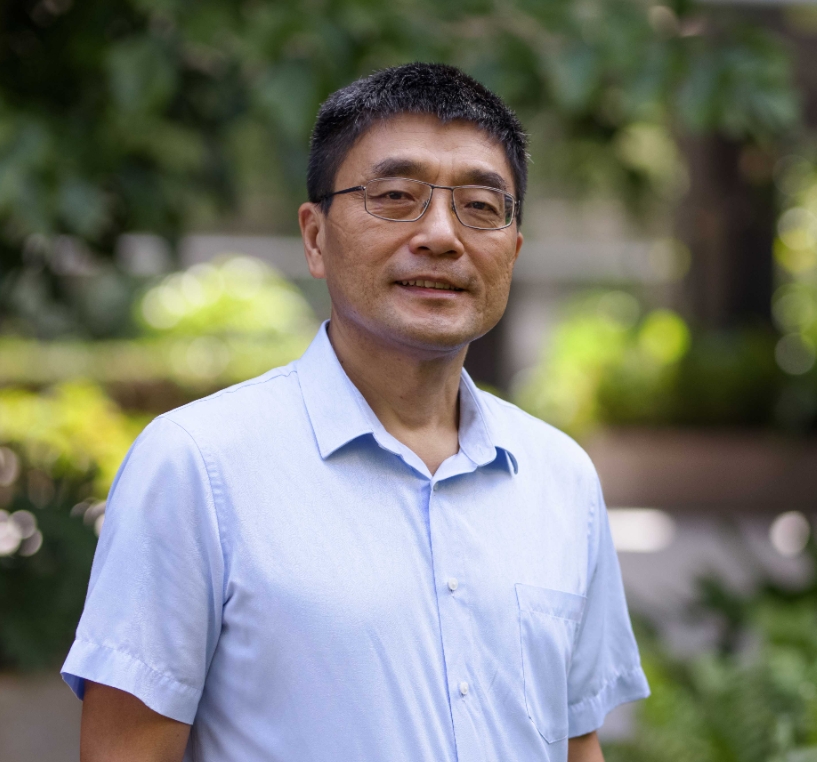 |
He has been awarded Highly Cited Researcher since 2019 by Clarivate Analytics, and elected for the Research Award 2023, College of Engineering, NTU. He has been a Distinguished Lecturer in both IEEE Circuits and Systems Society (2016-17) and Asia-Pacific Signal and Information Processing Association (2012-13). He has been an Associate Editor for IEEE Trans. Neural Networks Learn. Syst., IEEE Trans. Image Process., IEEE Trans. Circuits Syst. Video Technol., IEEE Trans. Multim., IEEE Sig. Process. Lett., Quality and User Experience, and J. Visual Commun. Image Represent. He has been a TP Chair for several international conferences and is a General Co-Chair for IEEE ICME 2025. He believes that good theory is practical and has delivered 10+ major systems for industrial deployment with the technology developed.